Basal Body Temperature Charting: How to guide for fertility.
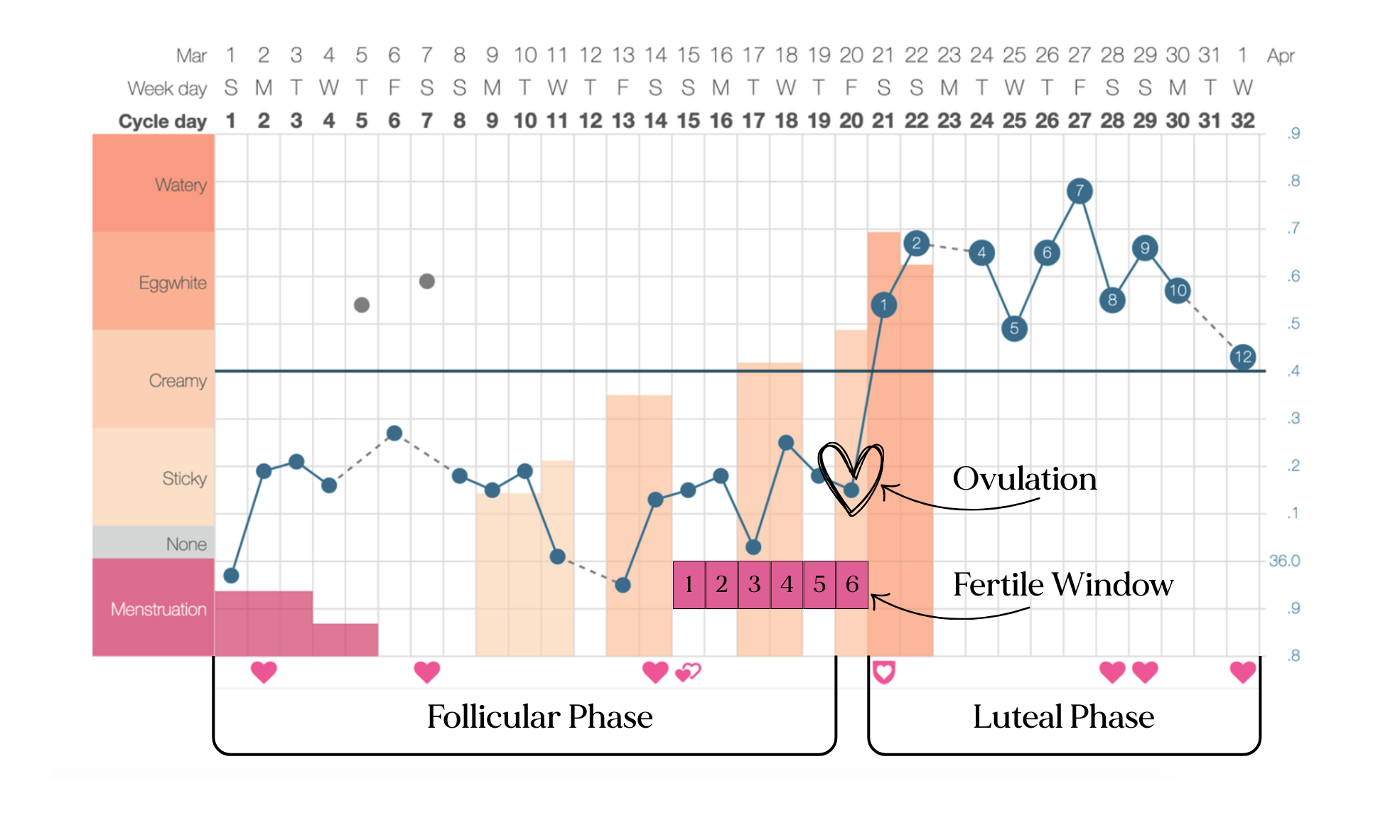
Understanding BBT:
Ever heard of basal body temperature charting? Maybe you have but you’ve never truly understood it. It can be difficult to get your head around, but once you understand it, it simply becomes a part of your daily routine.
I recommend BBT for basically all of my clients who are planning on trying to conceive within the next year or those who have already started. It is also great for those who just want more insight into their own body, as the menstrual cycle is your fifth vital sign of health - a good indicator of overall health.
Basal body temperature is your body’s lowest resting temperature — so your reading first thing in the morning, before getting up, picking up your phone or reading a book. Hormone changes around ovulation cause a small but consistent rise in BBT (usually about 0.3-0.5°C). Tracking this every day helps you see when ovulation actually occurred. Your body temperature will rise after ovulation has happened, giving you an indicator of when to expect ovulation to occur for you in the future.
When you are trying to conceive, knowing when you are ovulating is vital as your fertile window is the 5 days prior to ovulation, plus the day of ovulation. Sperm can survive in the reproductive tract for several days, but timing is everything!
I recommend pairing BBT with other ovulation signs to really get to know your body.
The ovulation signs you should be looking out for include:
clear, egg white consistency discharge
increase in libido
increased energy and motivation
one-sided ovarian pain
tender breasts
To get started with BBT, you will need a thermometer and to download the Kindara app.
Note: If you are a shift worker, I recommend getting the Temp Drop thermometer.
Okay so here is how it will go — you wake up in the morning > grab your thermometer from next to your bed > take your temperature > record it in your kindara app. It’s that simple.
It is beneficial to also record your discharge changes throughout the month, intercourse and menstruation, plus any other symptoms you may have experienced. This gives you and your practitioner such insightful information. You can also connect your Kindara app directly to your practitioner so they have all your information on file prior to your appointments.
So what about ovulation prediction kits? Well, they technically don’t test for ovulation. Instead, they test the hormone LH which surges prior to ovulation. Sounds good, but unfortunately, you can test positive, and then not actually ovulate at all.
If you’re looking to tune in on your body, understand your cycle and your fertility — BBT and tracking ovulation symptoms is my number one recommendation. Remember, timing is everything when trying to conceive!
If you want a practitioner to support you through your fertility journey (preconception, pregnancy, birth and postpartum), you can book an appointment with me by clicking the button below.